
There’s some quiet genius about “Hook,” the mid-1990s hit by Blues Traveler. On the surface, the song is catchy, loose, a little rambling, driven by harmonica and an unmistakable sing-talk delivery. But underneath, its intellectual lyrics explaining why songs like it work in the first place, poking fun at why you love it.
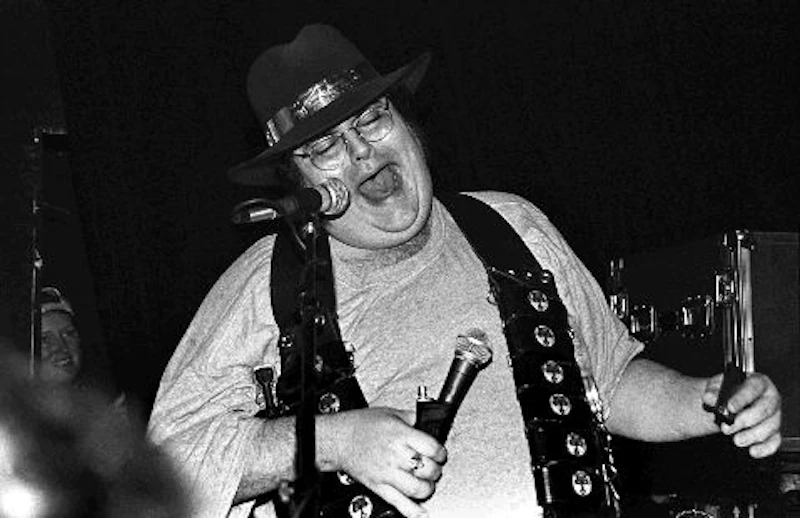
At the center is John Popper, one of the more unlikely frontmen to ever land a Top 40 hit. Born in Ohio and raised partly in New Jersey, Popper built his reputation less on image and more on musical force. He’s a virtuoso harmonica player, the kind who treats the instrument like a lead guitar, weaving rapid-fire solos that are almost impossible to replicate. Blues Traveler came out of the late-1980s jam band scene, eventually breaking through with their 1994 album Four, which went multi-platinum and turned songs like “Run-Around” and “Hook” into radio staples.
“Hook” is easily the most self-aware of the bunch. The song opens with the line, “It doesn’t matter what I say,” which is less a throwaway lyric and more a thesis statement. Popper’s openly admitting the trick. As one critic says, the song is essentially a commentary on how listeners latch onto melody and delivery more than meaning, a kind of inside joke about the music industry itself.
If the melody sounds oddly familiar, that’s because it is. The structure of “Hook” borrows heavily from Pachelbel’s Canon in D, one of the most recycled chord progressions in Western music. That progression acts as the hook, reinforcing the song’s argument while also proving it. You’re already wired to like it. Popper knew that and leaned all the way in. One critic describes the philosophy behind the song, stating: "The commentary is a big joke about how listeners will like just about anything laid on top of the chords of the infinitely clichéd Pachelbel canon, even lyrics that openly mock them for liking it.’
What makes the song stick decades later is how shamelessly it pulls back the curtain. At one point, Popper basically confesses, “I’ve said nothing so far,” and keeps going anyway. It’s funny and smug, but honest in a way pop music rarely is. The chorus drives it home with that line everyone remembers: the hook brings you back. Not the lyrics (though their message also turns out to be meaningful), just the hook.
Popper has talked about the unique circumstances of writing “Hook”; it’s a track that functions as parody and proof of deeper meaning in melody and lyric: critiquing shallow songwriting while becoming a massive hit using the same tools.
Popper himself hasn’t exactly had a quiet career outside the music. He’s been open about struggles with weight and underwent major weight loss surgery, something that changed both his health and stage presence. There’s also been controversy, including a well-publicized 2007 arrest in Washington state involving weapons and marijuana, and a 2017 online harassment situation, which added a layer of notoriety to his public image. Neither derailed his career, but reinforced that he’s always been a complicated figure, not just the guy with the harmonica.
Through all of that, his musicianship has never been in question. Even critics of the band tend to concede that Popper’s technical ability is on another level. “Hook” is probably the best example of that balance between skill and concept. What’s interesting is how the song ages. The music industry it critiques has gotten more formula-driven, more algorithmic, more dependent on that instant grab. “Hook” feels less like satire now and more like a blueprint. The idea that a familiar progression and a strong melodic loop can outweigh lyrical substance is standard industry practice now.