
The BBC recently ran a piece on how technology is transforming woodworking. Dust-free workshops. AI-assisted table saws that can tell the difference between oak and your thumb. Robot microfactories that arrive in shipping containers and spit out the timber frame of a house in a day.
For years, white-collar workers comforted themselves with a soothing fantasy. AI would come for the truck drivers, the warehouse workers, the cashiers, the men with steel-toe boots and suspiciously strong forearms. The lawyer in a glass tower, meanwhile, would remain safe, sipping oat milk and forwarding emails until retirement.
Instead, AI walked straight into the office and started eating the middle class alive. Copywriters discovered that a chatbot could produce 30 versions of their marketing slop before they finished adjusting the font size in a PowerPoint presentation. Junior coders found out machines could already write functional software while they were still arguing about “workplace culture” on Slack. Even parts of medicine and law now look less like professions and more like waiting rooms for automation.
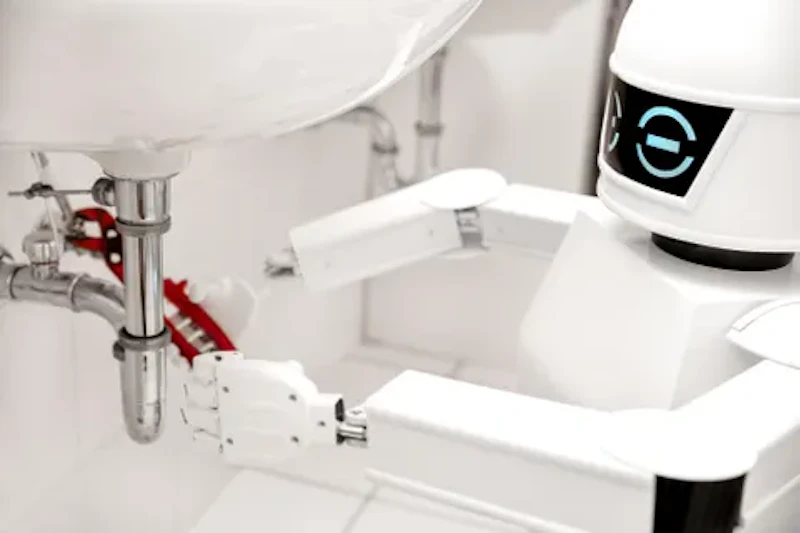
The bloodbath has started in white-collar America because so much modern office work was fake work to begin with. Endless meetings. Endless reports nobody reads. AI looked at this vast paper castle and did what termites do. Blue-collar workers watched all this unfold with understandable satisfaction. The plumber leaned back and said the magic phrase repeated across the internet millions of times over the past few years: “AI can’t fix a sink.”
True. For now.
But read that woodworking story carefully, and you can already see where this is going. The machines are becoming safer, smarter, cheaper, more compact, and easier to use. AI-assisted design tools can generate plans instantly. Automated Architecture in Britain is already shipping robotic construction systems directly to building sites. The machine reads the design, cuts the timber, assembles the panels, and does it all without complaining about its lower back or checking Instagram every seven minutes.
The important detail isn’t that robots can fully replace carpenters tomorrow. They can’t. They no longer need to. That’s the future. Not total replacement, but radical reduction.
A construction crew that once needed 20 workers may now need six. A plumbing company that once required 10 apprentices may now need three highly-skilled technicians to oversee semi-automated systems and diagnostic AI. One roofer equipped with drones, sensors, and automated cutting systems may soon do the work that once required an entire team.
The same thing happened in agriculture. America once needed huge chunks of the population to work the land. Then tractors arrived, followed by combines, GPS systems, automated irrigation, and software that can practically predict the weather. The farmer survived. Most farm jobs didn’t.
People often imagine automation as a dramatic Hollywood moment. The reality’s very different. A software update here. A productivity tool there. A machine that “assists” rather than replaces. Then one day, the company notices it can operate with half the staff, and suddenly Steve from accounts receivable is learning what “upskilling” means at the age of 50.
Previous industrial revolutions unfolded slowly enough for societies to adapt. The blacksmith’s son could become a mechanic. The factory worker’s daughter could become an office administrator. That’s no longer the case. The technology improves monthly, not generationally. Every few weeks, another capability appears that experts insisted was years away. Image generation. Legal analysis. Medical diagnostics. Coding. Voice replication. Design. Research. Translation. Music. Film editing. Education. Logistics. It keeps expanding because software scales ridiculously fast. Once the machine learns something, it can perform that task everywhere at once.
Economics always hunts inefficiency. If a builder can complete projects with four workers instead of 14, sentimentality about “the human touch” evaporates very quickly. There will still be carpenters, plumbers, electricians, and mechanics. Just fewer of them. The surviving tradesmen may become elite specialists, closer to master craftsmen than today’s workforce. Everyone else risks becoming economically surplus in a society increasingly run by machines that neither sleep, unionize nor demand dental insurance.