
Annihilation—Michel Houellebecq: In a world bereft of serious contemporary literature, Michel Houellebecq is a rare bird: iconoclastic, rigorous, hilarious, and concerned with the state of France and the world. Few have the courage or the fame to write a novel like 2015’s Submission, which imagines a near-future Europe run by radical Islamists; it’s semi-forgotten now, at least in America, that Houellebecq was on the cover of Charlie Hebdo promoting Submission when the paper’s offices were shot up by terrorists.
Annihilation, finally translated this year after an inexplicable three-year delay, may be his last novel, and while it continues Houellebecq’s fascination (and horror) with the catastrophic spread of liberalism, the most striking aspect of the novel is structural: after 300 pages of espionage and mystery, the lead character is diagnosed with oral cancer. Everything else falls away after that: Paul quickly begins to deteriorate, with barely enough time to comment on his fate and his life (“How quickly it had gone…!”). After rescuing his paralyzed father from a euthanasia happy retirement home, dealing with an international Satanic terror cell, and his own romantic and family foibles, everything telescopes into his disease and his impending death. It’s a stunning effect, one that puts you in the mind of a man diagnosed with a death sentence. Houellebecq doesn’t play this for laughs or sadism; instead, it’s real: time waits for no one, and it’s all gone so much quicker than we think.
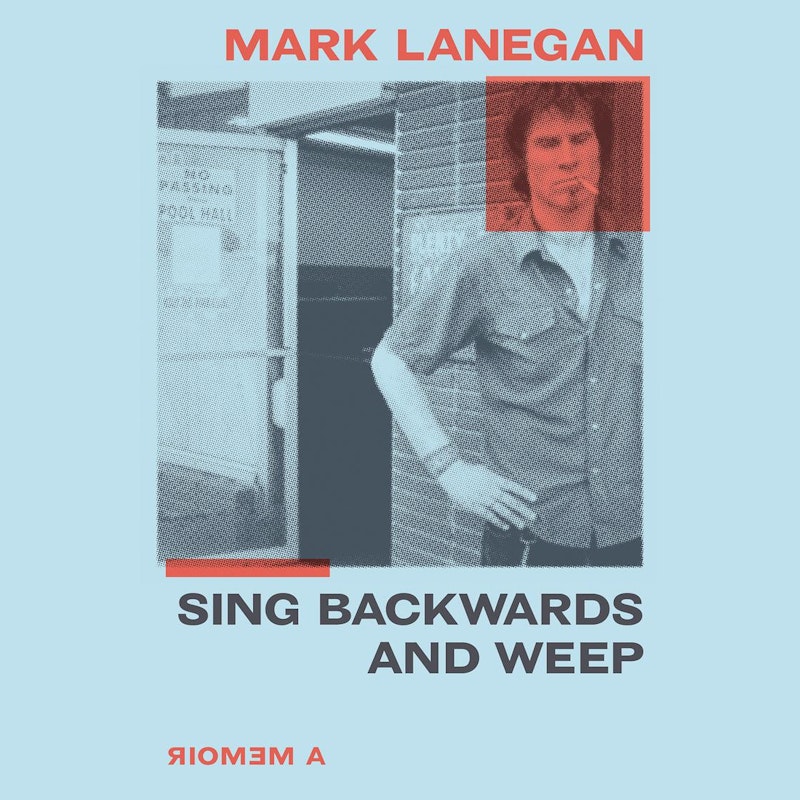
Sing Backwards and Weep—Mark Lanegan: I’ve never listened to Screaming Trees. I’ve loved Nirvana all my life, along with many late-1980s and early-1990s bands that came up alongside these Sub Pop heroes, but I never got around to Screaming Trees. I learned early on that no one was even close to Nirvana, just as no one was close to At the Drive-In or The Smashing Pumpkins or Animal Collective; still, I was musically omnivorous until my mid-20s, yet Screaming Trees still passed me by. I read frontman Mark Lanegan’s memoir Sing Backwards and Weep based on Bret Easton Ellis’ recommendation—he called it the best rock memoir he’d ever read. It’s easy to see why.
Lanegan, who died just two years after the book’s publication of COVID-19, lived “like a pirate,” to quote friend/drug buddy Evan Dando, who admits to using a ghostwriter for his own memoir Rumors of My Demise. Lanegan clearly didn’t, and the book is gripping even if you’ve never heard a note of the guy’s music. Maybe it’s better if you don’t: the book ends in the early-2000s before he goes solo, and he reiterates over and over how much he HATED being in Screaming Trees and how much their music sucked. Songwriter and lead guitarist Lee Connor was an arrogant, belligerent, mediocre guitar player who wrote songs that Lanegan strained to sing; the singer only stayed in band to get out of his “redneck” hometown of Ellsberg, Washington, where he met Kurt Cobain at an early Nirvana show at the local library. They became quick, close friends, and Lanegan remained one of Cobain’s only confidantes as he rose to superstardom and quickly burned out. Cobain called Lanegan the day he died; Cobain asked his friend if he wanted to come over, get high, and listen to some records. Lanegan didn’t feel like it, hungover and in his underwear. Who knows what would’ve happened if he came over?
The book is full of regrets like that, mostly girls he fumbled and connections he destroyed. David O. Russell was a massive fan of Screaming Trees and Lanegan’s solo albums, and he wanted to work with him on his first movie. Lanegan didn’t feel like traveling to New York because he was a severe heroin addict. It’s incredible this guy made it to 57 considering the “pirate” lifestyle he lived, detailed at length in Sing Backwards and Weep. There are just as many stories about Layne Staley and Cobain as there are about the “street people” Lanegan befriended, went into business with, fucked, or all three. That’s to say nothing of his withdrawal stories, the most harrowing of which takes place in Amsterdam. Good lord, thank GOD I don’t like painkillers! I’ve never read a more compelling or grimy rock book; it’s a shame Lanegan isn’t alive to keep writing new volumes.
Sonic Life—Thurston Moore: The Sonic Youth frontman has led a much more acceptable and safe bourgeois rock lifestyle, but because of his equal interests in rock history and the music itself, his memoir Sonic Life reads more like a history book than anything personal. Much richer and kind-hearted than Kim Gordon’s scabrous and embarrassing Girl in a Band, Moore’s memoir traces his teen years in Connecticut making the trek to Manhattan to see Television, Patti Smith, Suicide, the Cramps, and many more in the mid/late-1970s. As soon as Sonic Youth forms (after Moore worked with late Splice Today contributor J.D. King in The Coachmen), Moore gets a little more personal, speculating whether or not Gordon would’ve been happier living her life as a visual artist and bypassing music entirely.
Sonic Life has no gossip or dirt on Moore’s acrimonious divorce, a fact that was remarkably criticized upon the book’s release in late 2023; Pitchfork called this “evasion” a “revisionist history,” and “lazy.” What bullshit—Gordon gets away with slagging off practically everyone she’s ever come into contact with (while revealing herself to be far more shallow and superficial than her ex-husband) because her book came out at a politically convenient time. But if Moore did the same, even in response, he’d be pilloried. And he was still pilloried when he took the high road! Ignore the noise: Sonic Life is a masterful epic of a life in music, with the kind of curiosity and humility that all artists could learn from.
The Golden Orange—Joseph Wambaugh: Pulp novels make the best movies, and if I ever get the chance, I’d like to make this 1990 Joseph Wambaugh cop thriller into a movie. Drunk as a skunk Winnie Farlowe, just turning 40 and mourning “the death of youth,” gets sloshed and crashes a boat in the very ritzy Golden Orange area of California. He’s suspended and quickly pulled into the orbit of bombshell and obvious scammer Tess Binder, mourning her closeted father and secretly in cahoots with his lover. Or is she…? Wambaugh, once a well-known best seller, died this year just a day after Gene Hackman’s body was discovered, and he’s largely been forgotten, just as all popular novelists are. But I’ve scooped up his books; between The Choirboys, The Glitter Dome, and The Golden Orange, it’s the latter that’s moved me the most, starring a character that’s a dead ringer (in my mind) for Charles Durning.
In a decade, Jesse Plemons could play the role, or Paul Walter Hauser; Philip Seymour Hoffman would’ve been the first choice in a prestige version. But a movie of The Golden Orange shouldn’t be stuffy: it should be super-saturated and slightly sleazy, even a little goofy, in order to capture Wambaugh’s rhythms and particular sense of humor. Robert Aldrich’s The Choirboys is great, but too comic for Wambaugh; the movies Wambaugh directed himself take everything too seriously. Inherent Vice is also too discursive and silly, but it gets close to that Wambaugh verve, albeit without the earnestness and love for his characters and the world of police officers. In a world that demonizes the police, it’s refreshing to read a novelist (and former LAPD officer) have unapologetic fun in that world.
The Disenlightenment—David Mamet: In his latest book of essays, the author, filmmaker, and Marty Supreme supporting player outlines in clear language all of the damage that liberals and the Democratic Party have done to the country in the last five years. He explains, in simple terms, everything that’s poisonous about the left-wing agenda that briefly took over the world in 2020 and collapsed in an instant when Donald Trump improbably won a non-consecutive second term. The Disenlightenment is an angry book, but full of resolve, and more optimistic than 2020’s Recessional, which read like an elegy for the West. Here, Mamet dissects the leftist agenda that nearly destroyed the country with calm and poise, knowing that, for now, he’s won, and the future is bright for the first time in years.
I can’t wait to read his next collection—I’m sure the Minnesota daycare scandal will be covered. It’s a blessing to have such a fantastic writer not only interested in politics but willing to compromise his career in order to exercise his First Amendment rights. People take it for granted that Hollywood is overwhelmingly liberal, but there’s comparatively little outrage over conservatives being blackballed and smeared. One hopes this will change soon, if only because the left has had a year to regroup and rethink their agenda, only to spin their wheels and dig their heads further into the sand. That’s what we call Quality Learing!
—Follow Nicky Otis Smith on Twitter: @NickyOtisSmith