
I have the impression that American popular art forms have undergone a dramatic decline since around the turn of the millennium. I'm not sure how I'd show that, exactly. Also it might be what sixtysomethings of any generation say: our shit rocked so hard but your shit sucks. Nevertheless, our shit rocked so hard and your shit sucks. Well, as a general matter. With exceptions.
But I noticed that starting around 2005, all pop songs used auto-tuned vocals, from apparently mild pitch correction to choirs of ultra-processed robot voices. I associated it particularly with the advent of the Black Eyed Peas, but soon it was everywhere and in all genres except maybe the blues, in Kanye West, Travis Scott and Kesha. Post Malone pulled back a little on that country album, but not entirely, and maybe Tim McGraw hopped on. I thought the cyborg phase would last a few years, but humiliating though it may be to us humans, it never seems to end.
And it's not only the vocals. One awful moment in my account is Taylor Swift's shift from country to pop, which immediately embedded her in an entirely artificial musical environment of click tracks and no mandolins. The vocals were still expressive, if not as intimate, but the music’s now ultra-processed, like our foods.
The decline of American movies is well-displayed in best-film nominees such as Sinners and One Battle After Another, whose inane plots are matched with big-ass stars and big-ass budgets. They simulate auteur creation using CGI. It's all visual effects, let's say: cyborg for the eyes as The Weeknd is cyborg for the ears.
More to the point, Hollywood has a hell of a time today generating new intellectual property: we've spent the last 20 years in the era of sequalae, in which Thor 17 or Captain America 6 or the cast of Scream 31 are running through fake-ass worlds created by computer rendering.
It hasn't exactly been an amazing millennium so far for the novel. I think my own field of philosophy has declined in terms of originality and creativity. I guess you could call this "enshittification," though I don't really. What I notice, rather, is a decline in expressiveness and creativity, an emotional numbness in both artists and of audiences.
Many explanations might be assayed. As with any contemporary problem, people are content to blame social media for artistic decline and leave it at that. On the other hand, TikTok and Instagram might be scenes of whatever creativity remains. Also, I want an explanation, not a phrase: I don't see that these tools force anyone to erase their own voice into a machine. There's no reason not to make good poetry or music and release it on social media. I don't think “social media” explains anything.
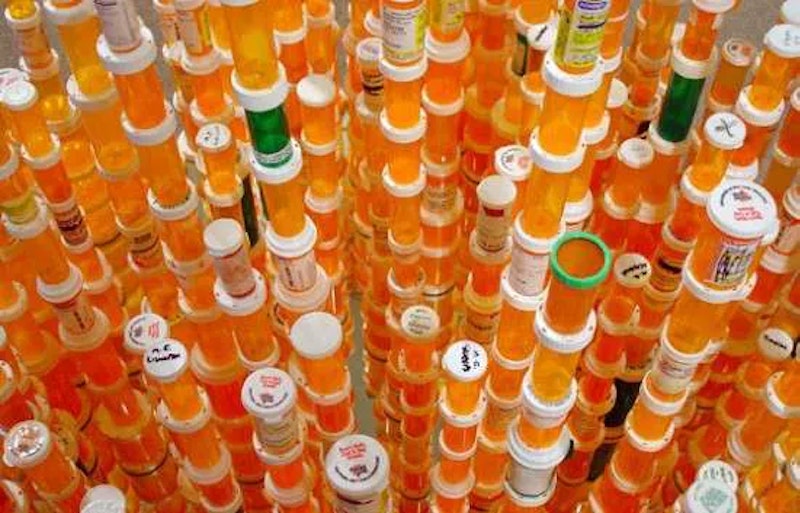
But I’ll offer a speculation. The rise of psychiatric medications, especially select serotonin reuptake inhibitors but also, for example, ADHD medications such as Adderall, coincides with decline of art. It might be a coincidence. Or it might be that poor art causes depression which causes drug use in a psychiatric vein. On the other hand, maybe cyborg pop and CGI-sequel films are the product of inhibited serotonin reuptake.
That psychiatric medication is affecting popular art is suggested not by the mere fact that the art’s going wrong; it's how the art going wrong: in numbness, dehumanization, emotional inhibition and inexpressiveness, conformity and sameness, safety and artificiality, a kind of collapse of individual creativity.
I hesitate to do this speculating, in part because I'm not convinced that SSRIs are not basically enhanced placebos. I wonder whether they have any real effects, much less the effect of forcing you to create bad art. I ran through a set of SSRIs in the early-2000s as treatments for OCD, including Lexapro, Celexa, Paxil, and Prozac. They had no effect on my various psychological dysfunctions, which is one reason that I'm skeptical. But one effect I definitely noticed and that more or less everyone who takes these drugs experiences: reduced libido. I found it difficult to have an orgasm for a while, and I was less worried about trying to than I had been before.
I think the relation of art and sex might be central: a lot of art, and in particular popular art, might centrally be erotic expression arising out sexual need. Or the drive to make art might in part be erotic desire repurposed. This is particularly true of popular arts such as film and popular music. When you think of the great rock 'n’ roll or country or soul of the 1960s, for example, you’re thinking, among other things, about intense sexual expression. That's something that Billie Holiday, Janis Joplin, Tammy Wynette, and Al Green had in common.
Movies still sell sex, of course (cf. Wuthering Heights) but maybe also express a certain numbness and a desperation to emerge from the numbness. But there’s little sexuality, for example, in superhero movies, or at least not since Tony Stark broke up with Pepper Pots. The death of Brigitte Bardot might index how far we've come, for example, from the sexy movie and the sexy movie star. Just losing some erotic capacity or intensity might have surprisingly pervasive aesthetic effects.
And perhaps if SSRIs have real effects, they include a slight numbing of all emotions. I often hear people say that the drugs have that effect on them. I can see wanting that, or needing it, or it may be that numbness is the only alternative to institutionalization or suicide. But I can’t think that it’s good for art, overall. Today's popular art might be slightly numbed art for slightly numb people. “Slightly numb” might entail “not very good.”
One might wonder whether the use of SSRIs is pervasive enough to explain what seems like a culture-wide transformation. Various facts gained by AI searches: almost 20 percent of the American population are currently taking medications for psychological conditions. It's hard to get information on what percentage of the population have taken such medications in the course of their lives. If it was 40 percent or more, that wouldn’t be surprising, especially because many people are first prescribed these medications as children.
Among creative types, the percentages might be significantly higher. Google thinks that while 25 percent of college students are taking psychiatric medications, it might be 35 percent or more of arts students. And again, that's just people taking the medications right now. The percentage who ever have, or who soon will: if it was over 50, I don't think music or art school professors would be surprised. Partly because the professors are on the same drugs.
That’s plenty to affect the culture of creativity: to affect the whole creative class in their collective experience, to affect their whole audience. It's enough to affect their sense of themselves and what their art is for (maybe therapy). It's enough to create the SSRI period of art.
But this year we're on to the next artistic epoch! As surrealism followed on cubism, the GLP-1 era will follow the SSRI period. One can only hope that the new one will rock a little harder than the last one.
—Follow Crispin Sartwell on X: @CrispinSartwell