
Which is the worst country in the Western world right now? Britain is busy turning itself into a badly-run theme park. France oscillates between pension protests and torchlit riots. Canada and Australia are pale shadows of the confident nations they once were. And yet, for this particular month, Germany has edged into first place. On purpose. And almost with pride.
Start with the economy, the one thing Germany used to do better than anyone. The president of the Federation of German Industries now warns that the country is in its “historically deepest crisis” and in “free fall.” This isn’t a wobble, but a four-year industrial losing streak dressed up as stewardship. Production’s falling again. Energy prices remain punishing. Regulation multiplies like rabbits. And Chancellor Friedrich Merz is sitting on an approval rating in the low-20s, looking less like a leader and more like a long-term caretaker for a house that’s already on fire.
The land that once epitomized order and efficiency now specializes in structural decline. Chemical plants sit half-idle. Engineers eye the exit. The great machine that powered post-war prosperity coughs, splutters, and then politely hands the future to China. Germany isn’t just losing growth, but also substance. The country that built BMW now runs on bureaucracy, activist courts, and increasingly shaky spreadsheets. And just like the economy, society itself is in freefall.
In one Bavarian nightclub, a man with German–Tunisian citizenship sexually assaulted a woman, attacked security with a broken bottle, and then rioted in a police station. The next morning, he was back on the street, charged but free, his crimes carefully counted as “German” for the federal statistics. Dual citizenship has become a convenient accounting trick: foreign when it’s flattering, German when it’s grim.
In Hamburg, 10 Syrian men are on trial after a 15-year-old fell to his death from the eighth floor while trying to escape an attack. Five of the 10, somehow, have the same birthday: January 1. Germany has hundreds of thousands of migrants stamped with that date, the administrative way of admitting, “We don’t know who they are or how old they are, but we waved them in anyway.” Now those paperwork fantasies collide with a dead child, a grieving father holding a photo in court, and a country pretending this is all just an integration hiccup.
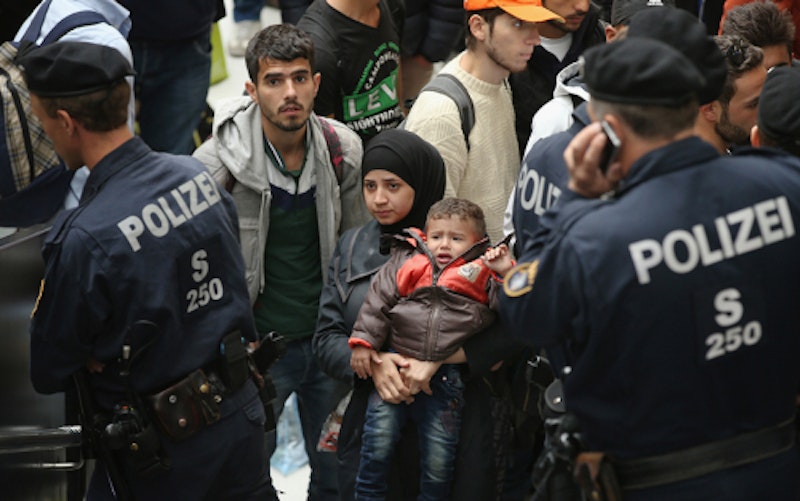
Meanwhile, the Afghan pipeline keeps flowing. An NGO originally designed to evacuate local staff from Kabul has evolved into a flying carpet operation, bringing in tens of thousands, many on dubious documents, with German embassies abroad quietly warning about fake passports and possible foreign agents. The answer from Berlin’s moral aristocracy? Not caution, but more money and more lawsuits to force more entries.
The Protestant church, which once catechized Germans in the basics of Christian duty, now spends six figures funding legal action against its own government so more claimants can stay or arrive. The bishops bless the bureaucracy of permanent import while parishioners padlock their doors and wonder why their streets feel like warzones. Christianity, in its official German form, has drifted from preaching the Gospel to managing a grant program.
And then there are the schools. Over 1100 teachers in Hesse recently signed a letter that reads like a cry for help. Children arriving at elementary school can’t tie their shoes, can’t sit upright, can’t follow instructions, and in some cases don’t know how to use toilet paper. Teachers report spending their days teaching basic bodily functions, mediating constant conflicts, and attempting to maintain order in classrooms that sound more like insane asylums than places of learning.
This isn’t simply about immigration, though migration plays a clear part. It’s about a state that has overloaded families, diluted standards, imported parallel cultures, and then acted surprised when classrooms became psychiatric wards with crayons. You can’t flood a school system with more pupils needing more attention, in more languages, with more unresolved trauma, and then hand teachers a checklist about “democracy education” and “digitalization” and expect anything but failure.
Add it all together: an economic model in free fall, a justice system that releases violent offenders before the paperwork dries, churches funding lawsuits against their own people’s interests, a migration regime that can’t even be honest about birthdays, and schools where children are one step away from being classified as patients rather than pupils. This isn’t a rough patch, but a perverse pattern.
Germany used to be boring in the best possible way. Trains ran, factories hummed, schools worked, streets were mostly safe, and politicians pretended to be serious. A once-civilized society invited vast numbers of people from failed states, and then refused to enforce the most basic norms. The result’s tragic and entirely predictable.

